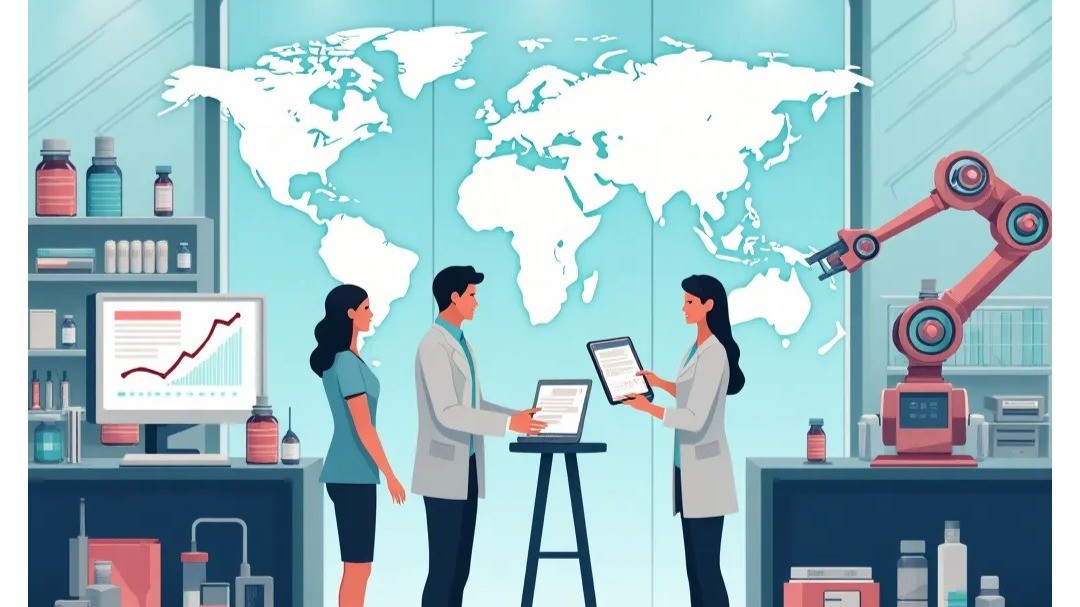
The pharmaceutical industry is entering a period where scientific discoveries are changing what medicine can achieve. Treatments that once required years of development are being explored through advanced biotechnology, artificial intelligence and increasingly precise approaches to disease management. From new cancer therapies to innovative medicines for obesity and rare genetic conditions, pharmaceutical companies are competing to solve some of healthcare’s most difficult challenges.
However, innovation is no longer measured only by the number of drugs a company brings to market. It also depends on how effectively businesses translate scientific research into treatments, improve manufacturing processes and make medicines accessible to patients. Several global pharmaceutical companies are setting themselves apart through investments in research, advanced technologies and long-term scientific strategies.

What Makes a Pharmaceutical Company an Innovation Leader?
Developing a new medicine requires much more than identifying a promising chemical compound. Companies must understand disease biology, conduct extensive laboratory research, complete clinical trials and demonstrate that treatments are safe and effective. This process can take many years and requires substantial financial investment.
The pharmaceutical companies that are leaders in innovation generally share several characteristics. They invest consistently in research and development, build partnerships with scientific institutions and explore treatment approaches that go beyond traditional medicines.
Some important indicators of pharmaceutical innovation include:
- Research and development investment: Consistent funding for discovering new medicines and improving existing treatments.
- Advanced drug technologies: Investment in biologics, gene therapies, antibody-drug conjugates and other emerging treatment platforms.
- Digital transformation: Using artificial intelligence and data analytics to support drug discovery and clinical research.
- Patient-focused development: Creating treatments that address specific medical needs and improve patient outcomes.
- Scientific partnerships: Working with biotechnology companies, universities and research organizations to accelerate discoveries.
The 2026 Global Pharmaceutical Innovation and Invention Index highlights companies including Eli Lilly, Merck, AstraZeneca and Roche among the leading performers. Its rankings also demonstrate that innovation involves both creating new scientific ideas and successfully developing them into valuable medicines.
Pharmaceutical Companies Making a Difference Through Innovation
Several established pharmaceutical businesses are demonstrating how scientific investment and strategic decision-making can influence the future of healthcare.

1. Eli Lilly and Company
Eli Lilly has become one of the most influential companies in modern metabolic medicine. Its work on tirzepatide, marketed as Mounjaro for type 2 diabetes and Zepbound for chronic weight management in the United States, has brought significant attention to treatments targeting metabolic conditions.
The company is also expanding its research beyond existing therapies. Its development pipeline includes orforglipron, an oral GLP-1 medicine designed to offer a tablet-based treatment option for obesity and related conditions. Lilly’s research also covers oncology, neuroscience and immunology.
Another important part of its innovation strategy involves artificial intelligence and advanced computing. The company has invested in high-performance computing capabilities and collaboration with NVIDIA to support drug discovery research.
2. Roche
Swiss pharmaceutical company Roche has built its innovation strategy around biotechnology, diagnostics and personalized healthcare. Its combination of pharmaceutical research and diagnostic expertise gives it an important position in the development of treatments tailored to individual patient needs.
Roche has a strong presence in oncology, neuroscience, immunology and rare diseases. Its research explores targeted medicines and biological treatments designed to address specific disease mechanisms.
The company’s diagnostic capabilities are particularly important. By combining information about a patient’s disease with advanced testing technologies, Roche aims to help healthcare professionals make more informed treatment decisions.
3. AstraZeneca
AstraZeneca has established a strong position in pharmaceutical research, particularly in cancer treatment and respiratory and cardiovascular diseases. Its oncology strategy explores several advanced approaches, including antibody-drug conjugates, immunotherapies and combination treatments.
Antibody-drug conjugates are particularly interesting because they combine an antibody that recognizes a specific target with a powerful drug component. This approach is designed to deliver treatment more selectively to cancer cells.
AstraZeneca reported 16 positive Phase III study results during 2025, demonstrating the scale of its clinical research activities. Its pipeline also includes treatments across multiple disease areas, reflecting a strategy focused on developing medicines that can address complex medical conditions.
4. Johnson & Johnson
Johnson & Johnson continues to invest in pharmaceutical innovation through its Innovative Medicine business. Its research covers oncology, immunology and neuroscience, with particular attention to conditions where existing treatment options may be insufficient.
One notable example is CAR-T cell therapy, including CARVYKTI, developed in collaboration with Legend Biotech for certain patients with multiple myeloma. This treatment uses a patient’s own immune cells, which are modified to recognize and attack cancer cells.
The company is also developing bispecific antibodies and other advanced therapies. These technologies demonstrate how pharmaceutical research is moving towards treatments that interact with specific biological targets rather than relying only on conventional drug mechanisms.
5. Novo Nordisk
Novo Nordisk has become a major force in diabetes and obesity treatment. Its work on GLP-1-based medicines has changed conversations around metabolic health and created new opportunities for pharmaceutical research.
The company’s research extends beyond its established injectable treatments. It is investigating next-generation medicines involving amylin, GLP-1 and other biological pathways that influence appetite, blood sugar regulation and metabolism.
Its 2025 annual report also highlights progress across its development pipeline, including research programmes in obesity, diabetes and rare diseases. This wider approach reflects an effort to build new treatment options rather than depend on a single successful drug category.
6. Merck & Co.
Merck & Co., known as MSD outside the United States and Canada, has an important position in oncology, vaccines and infectious disease research.
Its cancer medicine Keytruda has become a major example of immunotherapy innovation. Rather than directly attacking cancer cells like many traditional chemotherapy drugs, pembrolizumab works by helping the immune system recognize and respond to cancer.
Merck continues to explore new approaches in oncology and other therapeutic areas. Its research includes combinations of existing treatments, antibody-based technologies and potential new medicines designed to address diseases with significant unmet medical needs.
How Technology Is Changing Pharmaceutical Research
Technology is changing almost every stage of pharmaceutical development. Artificial intelligence, advanced laboratory systems and large-scale biological datasets are helping researchers investigate scientific questions that were previously difficult to explore.
AI can support the analysis of molecular structures, identify potential drug targets and help researchers prioritize promising compounds. It can also assist with clinical trial planning by improving how researchers evaluate patient populations and organize complex datasets.
Some of the most important developments include:
- AI-assisted drug discovery: Machine learning can help identify promising molecules and analyze biological information.
- Precision medicine: Genetic and molecular information can help researchers develop treatments for specific patient groups.
- Gene and cell therapies: These approaches aim to address diseases by modifying genes or using specialized cells.
- Advanced biologics: Antibodies and other complex biological medicines are expanding treatment possibilities.
- Digital clinical research: Data technologies can improve trial planning, monitoring and research analysis.
According to IQVIA’s Global R&D Trends 2026 report, artificial intelligence-enabled drug discovery and development could improve research productivity and help address some of the industry’s development challenges. However, these technologies still require scientific validation and clinical evidence before resulting in approved treatments.
Comparing the Innovation Strategies of Leading Pharmaceutical Companies
Although these companies operate in the same industry, their research priorities and scientific strengths differ.
| Company | Major Innovation Focus | Notable Example |
|---|---|---|
| Eli Lilly | Metabolic medicine and AI-supported research | Tirzepatide |
| Roche | Personalized healthcare and biotechnology | Targeted cancer treatments |
| AstraZeneca | Oncology and advanced biological therapies | Antibody-drug conjugates |
| Johnson & Johnson | Cell therapy and immunology | CARVYKTI |
| Novo Nordisk | Diabetes and obesity research | GLP-1-based medicines |
| Merck & Co. | Immunotherapy and vaccines | Keytruda |
These examples illustrate that pharmaceutical innovation does not follow a single business model. Some companies concentrate on metabolic diseases, while others prioritize cancer research, immune system therapies or personalized medicine.
The strongest long-term strategies often combine scientific expertise with the ability to develop, manufacture and distribute treatments at scale.
The Challenges Behind Pharmaceutical Innovation
Despite significant scientific progress, developing new medicines remains a difficult business. Research programmes can require billions of dollars in investment, and many potential treatments never progress beyond early development.
Clinical trials are another major challenge. A medicine that produces promising laboratory results may not demonstrate sufficient safety or effectiveness when tested in humans. Regulatory requirements also differ across markets, creating additional complexity for companies developing global treatment programmes.
There are several other important considerations:
- High development costs: Research, clinical trials and manufacturing infrastructure require substantial capital.
- Regulatory uncertainty: Approval depends on evidence of safety, quality and effectiveness.
- Patent competition: Companies must balance investment recovery with the need for affordable treatment options.
- Manufacturing complexity: Advanced biological medicines can be difficult to produce consistently at commercial scale.
- Patient access: Scientific breakthroughs have limited impact when patients cannot afford or obtain the resulting treatments.
These challenges make innovation a long-term commitment rather than a short-term competitive strategy.
Conclusion
The future of pharmaceutical innovation will depend on how successfully companies connect scientific discovery with real healthcare needs. Advances in artificial intelligence, biotechnology, precision medicine and advanced therapies are creating opportunities that extend far beyond traditional drug development.
Companies such as Eli Lilly, Roche, AstraZeneca, Johnson & Johnson, Novo Nordisk and Merck demonstrate different ways of approaching this transformation. Their research priorities may vary, but each illustrates the importance of sustained investment, scientific collaboration and the ability to turn promising discoveries into practical treatments.
Ultimately, the most meaningful pharmaceutical innovations will not simply be the newest medicines or the most advanced technologies. They will be the discoveries that help patients live longer, manage complex conditions more effectively and gain access to better healthcare.
Suggested Image Placements:
- After the introduction: A modern pharmaceutical research laboratory with scientists examining drug development samples.
- After the company comparison section: A scientific visualization showing molecular research, biotechnology and targeted medicine development.
Frequently Asked Questions
1. What makes a pharmaceutical company innovative?
A pharmaceutical company is considered innovative when it consistently develops new treatments, invests in scientific research, adopts advanced technologies and improves the way medicines are discovered and delivered.
2. Which pharmaceutical companies are known for innovation?
Eli Lilly, Roche, AstraZeneca, Johnson & Johnson, Novo Nordisk and Merck are among the prominent pharmaceutical companies recognized for their research capabilities and development of advanced treatments.
3. How is artificial intelligence changing the pharmaceutical industry?
Artificial intelligence helps researchers analyze biological data, identify potential drug candidates, study molecular structures and improve clinical research planning. It can support faster and more efficient drug development, although clinical validation remains essential.
4. What are the biggest trends in pharmaceutical innovation?
Major trends include precision medicine, gene and cell therapies, antibody-drug conjugates, AI-assisted drug discovery, advanced biologics and new treatments for metabolic diseases.
5. Why is pharmaceutical research and development important?
Research and development allows pharmaceutical companies to discover new medicines, improve existing treatments and address diseases for which effective treatment options remain limited.
Leave a Reply