
An invention does not need to come from a large research department or an established product company. Some commercially successful products begin with independent inventors who notice an everyday problem and develop a practical solution. The challenge often comes after the idea is created: finding a company with the resources, manufacturing capabilities and market reach to turn that concept into a real product.
Fortunately, some established businesses work with independent inventors through product submission programmers, open innovation initiatives and licensing arrangements. These opportunities allow inventors to present new concepts without necessarily building an entire manufacturing business themselves.
However, there is an important distinction between companies that accept invention submissions and companies that actually purchase or license inventions. Not every submission results in payment, and each business has its own evaluation requirements. Understanding these differences can help inventors identify realistic opportunities.
How Do Companies Buy Invention Ideas?
Companies generally work with independent inventors through three commercial arrangements. The right approach depends on the invention, its development stage and the company’s interest in bringing it to market.
1. Licensing agreements
Under a licensing agreement, an inventor allows a company to manufacture, distribute or sell an invention in exchange for agreed compensation. This may include royalties based on product sales.
2. Outright purchase
Some companies may negotiate to purchase an invention’s intellectual property rights. The inventor receives an agreed payment and transfers ownership according to the contract.
3. Development partnerships
A company may collaborate with an inventor to improve a concept, create prototypes or test its commercial potential. Compensation and ownership arrangements depend on the agreement between the parties.
For independent inventors, licensing can be particularly attractive because an established manufacturer may already have the production facilities, distribution networks and marketing experience needed to commercialize a product.
Top 10 Companies That Buy Invention Ideas
The following companies provide different opportunities for independent inventors, ranging from direct product submissions to structured innovation partnerships. Some publish specific compensation arrangements, while others negotiate commercial terms only after an invention passes their initial evaluation.
1. FastCap
FastCap is particularly interesting for inventors developing tools, accessories and products for woodworking professionals. The company focuses on practical solutions that make everyday work easier, faster or more efficient.
2. Procter & Gamble
Procter & Gamble (P&G) is a major consumer goods company with brands across personal care, household products, beauty and hygiene. Its Connect + Develop programme is designed to identify technologies, products and business opportunities developed outside the company.

Independent inventors and other innovators can present technologies or ready-to-market products through its innovation portal. P&G evaluates opportunities that could improve consumer experiences, product performance, packaging or business operations.
The company is particularly relevant for inventions involving household convenience, personal care, sustainable packaging and consumer product improvements. However, its programme is an innovation partnership route rather than a guarantee that every submitted idea will be purchased.
3. Henkel
Henkel works across consumer brands, adhesives and industrial technologies. Its open innovation initiative, Henkel Spark, connects the company with external innovators, researchers, startups and other potential partners.

The programme highlights opportunities involving hair care, laundry, home care, sustainable ingredients and packaging technologies. Inventors with a developed solution in one of these areas may find an opportunity to present their concept.
Henkel follows a screening and collaboration process. If an idea matches its requirements, the company may explore a proof of concept, pilot project and potential commercial expansion. This makes it especially relevant for inventors with technical solutions rather than only early-stage product suggestions.
4. Colgate-Palmolive
Colgate-Palmolive operates an open innovation portal that allows external innovators to submit developed technologies and inventions. Its business covers oral care, personal care, home care and pet nutrition, creating opportunities across several consumer product categories.

The company has identified specific innovation needs involving tooth whitening, oral application technologies, sustainable ingredients and fabric odor control.
An important detail is that Colgate-Palmolive does not promise payment simply for receiving an initial submission. Its portal explains that commercial discussions and further agreements may follow if an invention meets its requirements.
For inventors developing new materials, formulations, packaging technologies or practical consumer solutions, this is a relevant company to investigate.
5. OXO
OXO is known for designing household products that make everyday activities more comfortable and convenient. Its product range includes kitchen tools, cleaning accessories and home organization products.
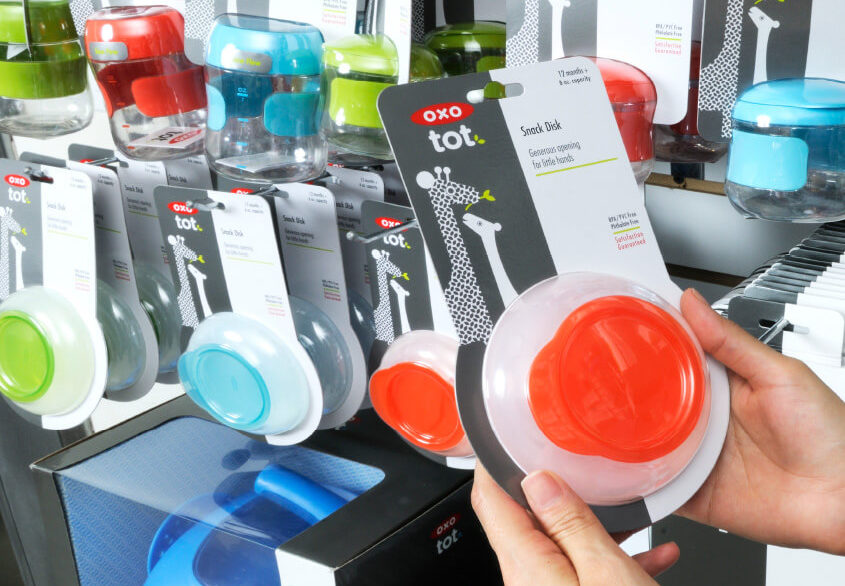
The company has an official inventor submission process for evaluating new product concepts. Inventors can provide drawings, photographs, videos or a website demonstrating how their product works.
OXO has specific intellectual property requirements. Its published submission terms require inventions to have a pending or issued patent, preferably in the United States. The company also states that it does not sign nondisclosure agreements and does not guarantee that submitted inventions will be licensed.
This makes OXO a relevant option for inventors who have already taken steps to protect their household product innovations.
6. Dorman Products
Dorman Products focuses on automotive replacement parts, repair solutions and aftermarket components. The company looks for practical ideas that help vehicle owners and automotive professionals address common repair challenges.
Its website provides a New Product Idea submission form for automotive product concepts. The company also operates an idea programme with specific eligibility and contest conditions.
Dorman is particularly suitable for automotive technicians, mechanics and inventors who understand recurring vehicle maintenance problems. Ideas involving replacement components, repair tools and solutions for difficult-to-source parts may fit its product categories.
However, inventors should carefully review the programme’s eligibility rules and compensation conditions before submitting anything.
7. Hasbro
Hasbro is a major entertainment and toy company with products spanning board games, action figures, family games and digital play experiences.
Through its Spark platform, Hasbro invites people to submit ideas involving games, toys and new play technologies. This creates an opportunity for inventors who have developed an original toy concept or an innovative way to improve play experiences.
The company evaluates submissions based on their originality, relevance and whether similar concepts are already under development.
Hasbro also explains that submitting an idea does not establish exclusive rights over the underlying concept. Inventors should review its submission terms carefully before sharing their work.
8. Mattel
Mattel is another important company for independent inventors working in toys, games and children’s products. Its brands include Barbie, Hot Wheels and Fisher-Price.
The company operates My Mattel Ideas, a platform for product submissions from eligible inventors. The programme allows individuals to present physical toy concepts for consideration.
However, there are geographical restrictions. Mattel’s published information has indicated that its idea-sharing programme is intended for inventors in the United States rather than international residents.
Payment is also not automatic. Mattel’s submission information explains that compensation may be possible if the company selects an idea, subject to its agreement terms.
9. 3M
3M operates across industrial products, safety equipment, healthcare technologies, adhesives and materials science. Its broad product portfolio creates opportunities for technologies that solve manufacturing, workplace and consumer challenges.
The company has a process for reviewing certain patented inventions from outside sources. Its submission requirements make intellectual property protection especially important, as it accepts patented ideas under the relevant programme conditions.
For inventors developing adhesive technologies, material innovations, protective equipment or industrial solutions, 3M may be worth investigating.
The company is not a general buyer of every unprotected concept. Inventors should confirm the current requirements before preparing a submission.
10. Stanley Black & Decker
Stanley Black & Decker develops power tools, hand tools, outdoor equipment and security products through brands such as DEWALT, STANLEY and CRAFTSMAN.
Its innovation interests make it relevant to independent inventors developing practical tools, workshop equipment and product improvements for construction and maintenance professionals.
The company’s inventor submission opportunities have included requirements for a U.S. utility patent or a published U.S. patent application. Selected concepts may be evaluated for possible commercialization.
For inventors who have already developed and protected a useful tool or technical solution, this can be a potential route to reaching a larger manufacturing and distribution network.
Comparing Invention Companies and Their Opportunities
Different companies have different expectations. Comparing their product categories and submission requirements before approaching them can save time and help inventors focus on suitable opportunities.
| Company | Main Invention Categories | Submission Opportunity |
|---|---|---|
| FastCap | Woodworking tools and accessories | Direct inventor submissions |
| Procter & Gamble | Consumer products and packaging | Connect + Develop |
| Henkel | Home care, hair care and sustainable materials | Henkel Spark |
| Colgate-Palmolive | Oral care and consumer technologies | Open innovation portal |
| OXO | Household and kitchen products | Patented invention submissions |
| Dorman Products | Automotive parts and repair solutions | New Product Idea programme |
| Hasbro | Toys, games and play technologies | Hasbro Spark |
| Mattel | Toys and children’s products | My Mattel Ideas |
| 3M | Industrial technologies and materials | Patented invention submissions |
| Stanley Black & Decker | Tools and outdoor equipment | Inventor submission opportunities |
Important: These are companies with documented submission or innovation programmes, not ten guaranteed buyers. Their eligibility rules and current submission terms should be checked before applying.
How to Approach Companies That Pay for Invention Ideas
A promising invention needs more than an interesting description. Companies receive many product suggestions, so inventors should demonstrate why their concept deserves attention.
Before approaching a potential buyer, prepare the following:
- A clear product description: Explain what the invention does, which problem it solves and who would use it.
- Visual documentation: Include drawings, photographs or a working demonstration that makes the concept easy to understand.
- Market research: Identify potential customers, competing products and what makes the invention different.
- Intellectual property information: Research existing patents and consider consulting a qualified patent professional about protection options.
- A commercial explanation: Describe how the product could fit into the company’s existing product range and generate business value.
A simple prototype can also make an invention easier to evaluate. It helps demonstrate functionality and gives a potential partner a clearer understanding of the product’s practical benefits.
How to Identify Legitimate Invention Companies
Not every business advertising invention development or marketing services is a genuine commercial partner. Some organizations target independent inventors with promises of guaranteed success and expensive service packages.
The Federal Trade Commission (FTC) warns inventors about invention marketing scams involving exaggerated profit claims and costly services that may provide little real value.
Before signing an agreement, consider these precautions:
- Research the company’s business history, reputation and previous commercial projects.
- Avoid organizations that guarantee licensing deals or substantial earnings.
- Understand every upfront charge and what services it actually covers.
- Read submission agreements carefully, particularly confidentiality and ownership provisions.
- Seek independent legal advice before transferring intellectual property rights.
In the United States, the American Inventors Protection Act also provides disclosure requirements for invention promoters. Inventors can request information about an invention promotion firm’s previous evaluations, clients and licensing outcomes.
A legitimate business opportunity should have understandable commercial terms, realistic expectations and a clear explanation of what happens to the invention after submission.
Conclusion
Turning an invention into a commercial product requires more than creativity. Independent inventors must identify the right industry, understand intellectual property requirements and find companies whose existing product portfolios align with their ideas.
Businesses such as FastCap, Procter & Gamble, Henkel, Colgate-Palmolive and OXO offer different routes for presenting new product concepts. Others, including Dorman Products, Hasbro and Stanley Black & Decker, provide opportunities for inventions within more specialized markets.
The most effective approach is to treat an invention as a potential business opportunity rather than simply an idea waiting to be purchased. A well-documented concept, appropriate intellectual property protection and a carefully selected commercial partner can make the difference between an interesting invention and a product with genuine market potential.
Frequently Asked Questions
1. What companies buy invention ideas from independent inventors?
Companies such as FastCap, Procter & Gamble, Henkel, Colgate-Palmolive and OXO have programmes or processes for evaluating inventions and innovations from outside contributors. Their commercial arrangements vary depending on the product and submission requirements.
2. Do companies pay for invention ideas?
Some companies offer royalties, licensing agreements or negotiated purchase arrangements for selected inventions. However, submitting an idea does not guarantee payment. Compensation depends on whether the company accepts the concept and reaches a commercial agreement with the inventor.
3. What are the top 10 invention companies that buy ideas?
Companies worth investigating include FastCap, Procter & Gamble, Henkel, Colgate-Palmolive, OXO, Dorman Products, Hasbro, Mattel, 3M and Stanley Black & Decker. Each has different product interests and submission conditions.
4. Can I sell an invention without having a patent?
Some companies, including FastCap, accept certain ideas without requiring an existing patent. Others, such as OXO, require a pending or issued patent. Inventors should understand the intellectual property implications before submitting an unprotected concept.
5. How much can an independent inventor earn from an invention?
Earnings depend on the invention’s commercial value, market demand, licensing terms and product sales. Compensation may involve a one-time payment, royalties or another negotiated arrangement. There is no standard amount that every inventor can expect to receive.
6. How can I find invention companies that are legit?
Start by checking official company websites and established submission programmes. Research business records, read agreements, look for independent reviews and avoid firms promising guaranteed profits in exchange for large upfront payments.